Minimum knot density to look for: 100 KPSI (knots per square inch) for a durable wool carpet; 300+ KPSI for fine silk pieces
Typical price range: AED 1,500–5,000 for a quality wool carpet (2×3 m); AED 8,000–60,000+ for hand-knotted Qum silk
Key origin regions: Qum (silk), Tabriz, Isfahan, Kashan, Nain — each with distinct weave structures and pile heights
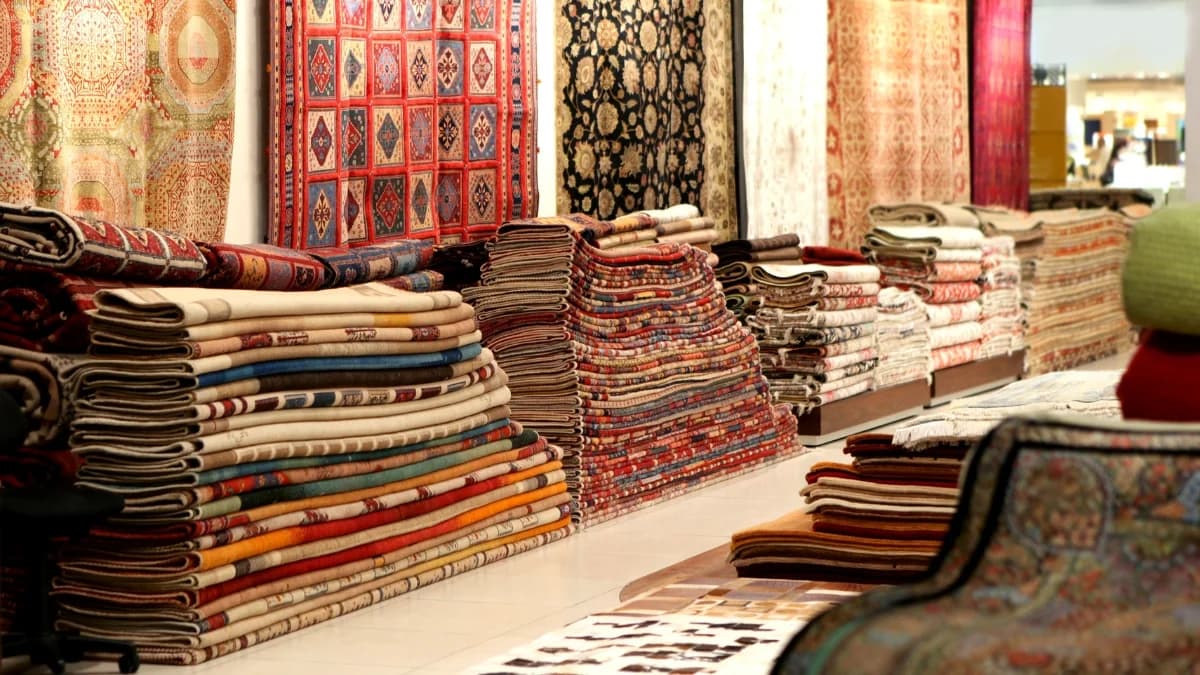
Al Malakia stock: 500+ hand-knotted Persian and Afghan carpets in showroom at the Blue Souk, Sharjah
Founded: 2008 — family-owned, sourced directly from weavers in Iran
Free transfer: Door-to-door from Dubai hotels; private transfers arrangeable from Abu Dhabi
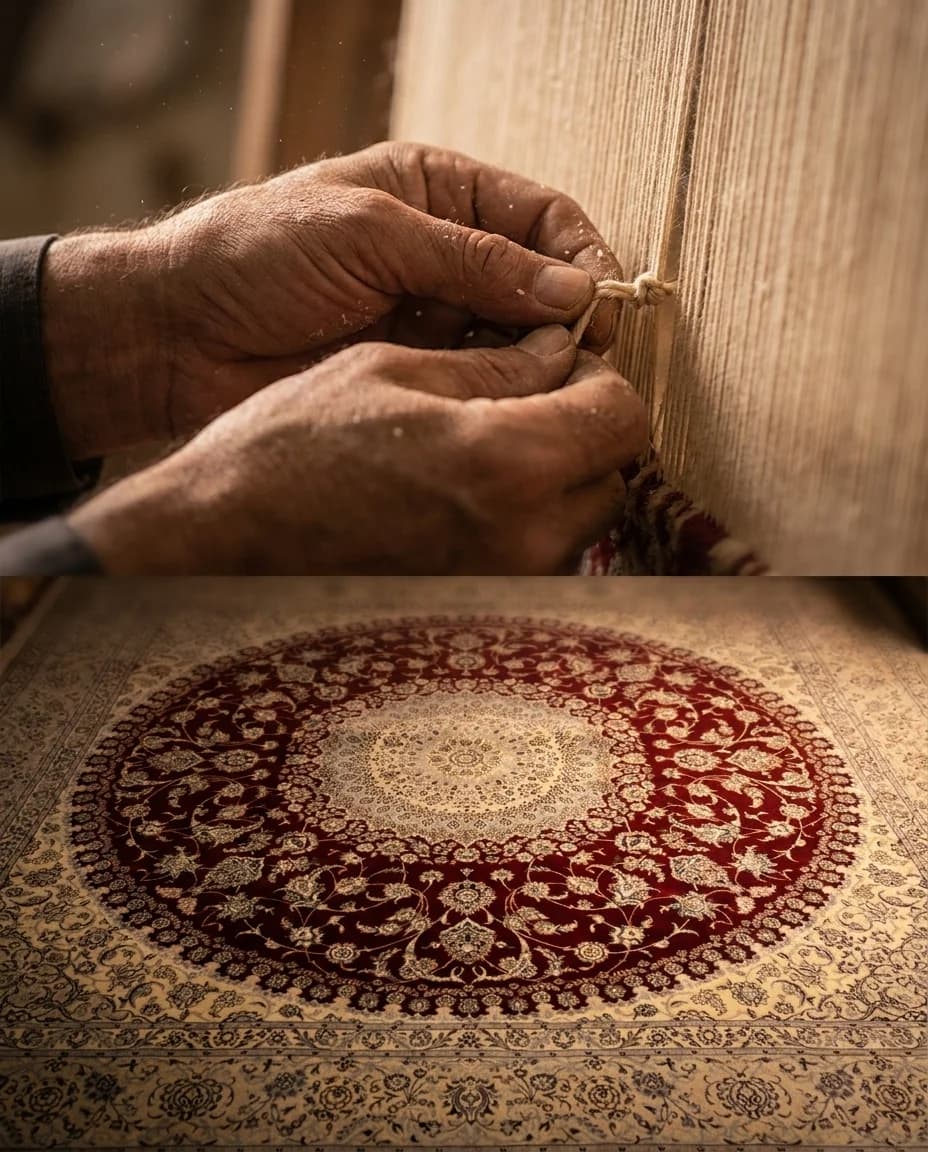
A hand-knotted Persian carpet can contain between 100 and 1,000 knots per square inch, and each one is tied by hand — a single square metre of fine Qum silk can represent six months of a weaver's work. That context matters when you are standing in a showroom for the first time, trying to decide whether a carpet is worth its price tag. This checklist distils what to examine, what to ask, and what to walk away from — based on over 15 years of direct sourcing from Iranian weavers at Al Malakia Persian Carpets, established in 2008 at the Central Souq (Blue Souk), Sharjah.
For a deeper foundation before you shop, read The Complete Guide to Buying Persian Carpets in the UAE, which covers the full history, regional styles, and investment considerations in detail.
1. Decide on Fibre First
The fibre determines durability, sheen, price, and appropriate use. There are three primary options in the Persian carpet market:
- Wool on cotton: The most practical choice for homes with foot traffic. Wool pile on a cotton warp gives resilience and a matte, warm finish. Origin cities like Tabriz and Kashan are known for this construction.
- Silk on silk: Woven entirely from silk — warp, weft, and pile. Produces the finest detail and a reflective sheen that changes with light direction. Qum (also written Qom) is the benchmark origin for this category. Best suited for low-traffic display areas or walls.
- Wool on silk (or silk highlights): A hybrid — silk warp gives a finer foundation, allowing higher knot counts, while wool pile keeps the cost more accessible than full silk. Isfahan and Nain weavers frequently use this structure.
Checklist action: Before entering the showroom, decide where the carpet will live and how much foot traffic it will receive. This single decision narrows your fibre choice significantly.
2. Understand Knot Density
Knot density is measured in KPSI (knots per square inch) or KPCM (knots per square centimetre). It is the single most objective quality indicator in a hand-knotted carpet.
| Density (KPSI) | Category | Typical Origin | Use Case |
|---|---|---|---|
| 40–100 | Tribal / Village | Afghan, Kurdish, Gabbeh | High-traffic rooms, rustic interiors |
| 100–250 | City / Workshop | Tabriz, Kashan | Living rooms, formal dining |
| 250–500 | Fine city | Isfahan, Nain | Bedrooms, low-traffic display |
| 500–1,000+ | Museum / Collector | Qum silk | Wall display, investment pieces |
To verify density yourself: turn the carpet over and count the number of knots along a 2.5 cm (1 inch) horizontal line and a 2.5 cm vertical line, then multiply the two numbers.
3. Check the Dyes
Natural vegetable dyes — from pomegranate rind, madder root, indigo, and walnut husk — produce colours that mellow and deepen over decades. Synthetic dyes, introduced widely after the 1860s, can fade unevenly or bleed when damp.
Checklist actions:
- Fold a corner of the pile back against the light — natural dyes show gradual tonal variation (called abrash); uniform, flat colour can indicate synthetic dye.
- Rub a damp white cloth against the pile — a small amount of initial bleeding is normal in freshly washed carpets; heavy dye transfer on a dry carpet is a red flag.
- Ask the seller directly whether dyes are natural, synthetic, or mixed. A knowledgeable merchant will answer without hesitation.
4. Examine the Back of the Carpet
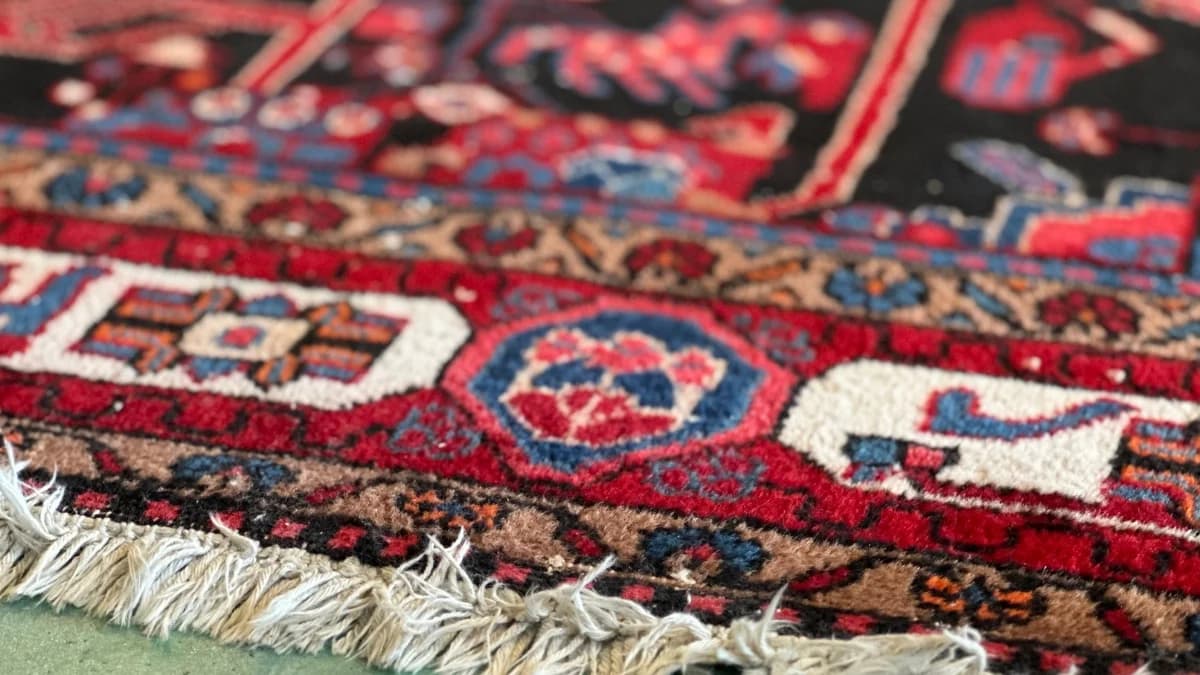
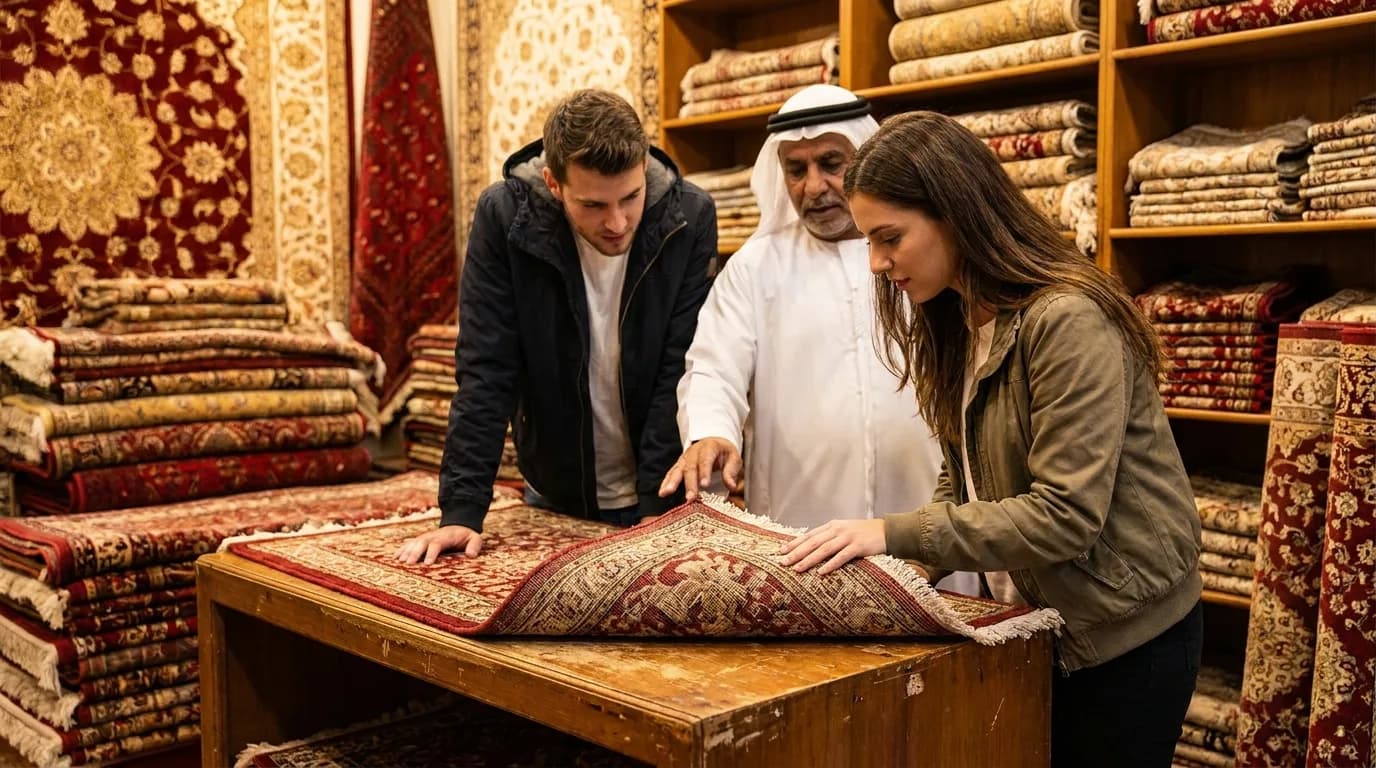
The reverse side tells you more than the front. On a genuine hand-knotted carpet, the pattern on the back mirrors the front with clearly defined individual knots visible. A machine-made carpet has a uniform grid backing — often latex or synthetic — with no visible knot structure.
Also check for:
- Fringe: On a hand-knotted piece, the fringe is an extension of the warp threads — integral to the structure. Sewn-on or glued fringe is a sign of either machine production or repair work presented as original.
- Evenness of the back: Minor irregularities are expected in hand-knotted work and confirm authenticity. A perfectly uniform back can indicate machine weaving.
5. Know the Major Origin Cities
Origin affects design vocabulary, structure, and resale value. The five cities most represented at Al Malakia's showroom are:
- Qum (Qom): Iran's primary silk-weaving centre. Floral medallion and garden designs. Highest knot counts in the market.
- Tabriz: The commercial carpet capital of Iran. Produces wool, silk, and wool-on-silk. Medallion and pictorial designs are common. Wide price range makes it accessible for first-time buyers.
- Isfahan: Arabesque and Shah Abbas floral patterns. Typically wool pile on silk warp. Consistent craftsmanship and strong secondary market.
- Kashan: Known for dense wool pile, deep reds and blues, and medallion-and-corner compositions. Strong durability for home use.
- Nain: Pale ivory or beige ground with intricate floral detail. Fine wool with silk highlights. Suits contemporary interiors.
Learn more about how these origins compare in our complete Persian carpet guide for UAE buyers.
6. Set a Realistic Budget
Price is determined by knot density, fibre, size, age, condition, and origin. As a working guideline for the UAE market:
- AED 1,500–5,000: Quality workshop wool carpet, 2×3 m, Tabriz or Kashan origin
- AED 5,000–15,000: Fine wool or wool-on-silk, Isfahan or Nain, same size range
- AED 15,000–60,000+: Hand-knotted Qum silk, 1.5×2.3 m, 500+ KPSI
Be cautious of prices significantly below these ranges for carpets presented as fine or antique — the economics of hand-knotting do not allow for deep discounts on genuine pieces.
7. Ask About Provenance and Documentation
A reputable showroom will be able to tell you the city or region of origin, the approximate period of weaving, and the fibre composition. For carpets above AED 20,000, ask whether a certificate of authenticity is available. Direct-source merchants — those who buy from weavers rather than through intermediaries — can typically provide more specific provenance information.
Al Malakia has sourced directly from Iranian weavers since 2008. Our about page outlines our sourcing model in full.
8. Red Flags to Walk Away From
- Fringe that is sewn or glued rather than integral to the weave
- Heavy dye transfer on a dry cloth test
- A uniformly perfect back with no visible knot structure
- Vague or inconsistent answers about origin and fibre
- Prices that seem too low for the claimed quality tier
- High-pressure sales tactics or claims of "sale ending today"
Why Visit Al Malakia Persian Carpets?
Al Malakia has operated from Shop 45–48, Central Souq Block 3 (Blue Souk), King Faisal Road, Sharjah since 2008 — a family business in its second generation, sourcing directly from weavers in Qum, Tabriz, Isfahan, Kashan, and Nain. The showroom holds 500+ hand-knotted pieces, and every question in this checklist can be answered on the floor with the carpet in front of you.
- Visiting from Dubai? We offer a free door-to-door transfer from Dubai hotels — no transport logistics to manage.
- Coming from Abu Dhabi? Private transfer arrangements are available on request.
- Opening hours: Saturday–Thursday 10:00–22:00 | Friday 14:00–22:00
- Phone: +971 6 573 1399 | WhatsApp: +971 50 537 2997
Get in touch or browse our carpet collection online before your visit.
Frequently Asked Questions
How do I know if a Persian carpet is genuinely hand-knotted?
Turn the carpet over. On a hand-knotted piece, you will see individual knots forming the pattern — the reverse image mirrors the front, and the knots are irregular enough to confirm human tying. Machine-made carpets have a uniform, often latex-backed reverse with no visible knot structure. You can also check the fringe: on a hand-knotted carpet, it is an extension of the warp threads, not sewn on.
What size should I buy for a living room?
The most practical approach is to measure your seating area and choose a carpet that sits under the front legs of all major furniture pieces — typically a 2.5×3.5 m or 3×4 m carpet for a standard living room in the UAE. A carpet that is too small for the furniture arrangement looks misplaced regardless of its quality. Bring your room dimensions to the showroom.
Is a Persian carpet a good investment?
Fine hand-knotted carpets — particularly Qum silk pieces at 500+ KPSI — have historically held and appreciated in value when properly maintained. Workshop carpets in everyday use are better considered as durable luxury goods than pure investments. The key factors for value retention are origin city reputation, knot density, dye type, condition, and size. Wikipedia's overview of Persian carpets provides useful context on the historical market.
What is abrash, and should I be concerned by it?
Abrash refers to horizontal bands of colour variation in a carpet's pile, caused by slight differences between batches of hand-dyed yarn. It is a natural characteristic of hand-knotted carpets using vegetable or hand-mixed dyes and is generally considered a sign of authenticity rather than a defect. Collectors often value pronounced abrash in tribal and village carpets. Uniform colour throughout a large carpet can actually indicate synthetic dye.
Can I negotiate the price at a Persian carpet showroom?
In most Persian carpet showrooms in the UAE, including those in the Blue Souk, polite negotiation is standard practice. However, be realistic: the economics of hand-knotted production — months of skilled labour per piece — do not allow for significant discounts on genuinely fine carpets. If a price drops dramatically at first resistance, it is worth reconsidering whether the carpet is what it was presented as.
How do I care for a hand-knotted Persian carpet once I get it home?
Rotate the carpet 180° every 12–18 months to ensure even wear. Vacuum with a low-suction setting, moving in the direction of the pile, and avoid vacuuming the fringe. For spills, blot immediately with a clean cloth — do not rub. Professional washing every 3–5 years by a specialist (not a general dry cleaner) is recommended for fine pieces. Keep carpets out of direct, prolonged sunlight to prevent fading.
Ready to put this checklist to use? Visit Al Malakia Persian Carpets at the Blue Souk, Sharjah — or send us a message on WhatsApp (+971 50 537 2997) with your room dimensions, budget, and any questions before you arrive. Our showroom carries 500+ hand-knotted pieces and every member of the team can walk you through each point on this list in person.