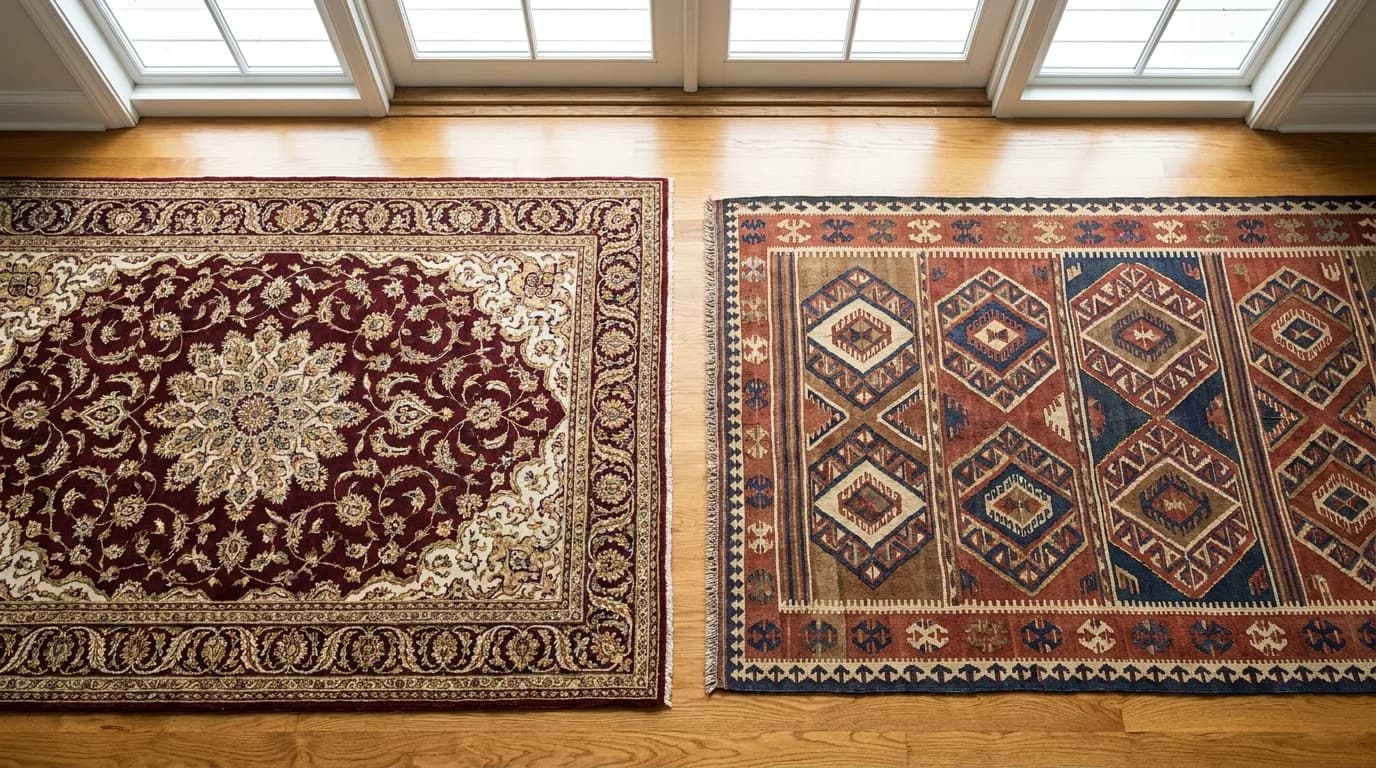
Key Knot Types: Persian (Senneh/asymmetric) knot vs Turkish (Ghiordes/symmetric) knot
Typical Knot Density: Persian silk Qum: 400–900 KPSI; Turkish wool Hereke: 100–400 KPSI
Common Fibres: Persian — silk, wool, wool-on-silk; Turkish — wool, cotton, some silk
Price Range at Al Malakia: Entry wool pieces from AED 800; fine Qum silk from AED 12,000+
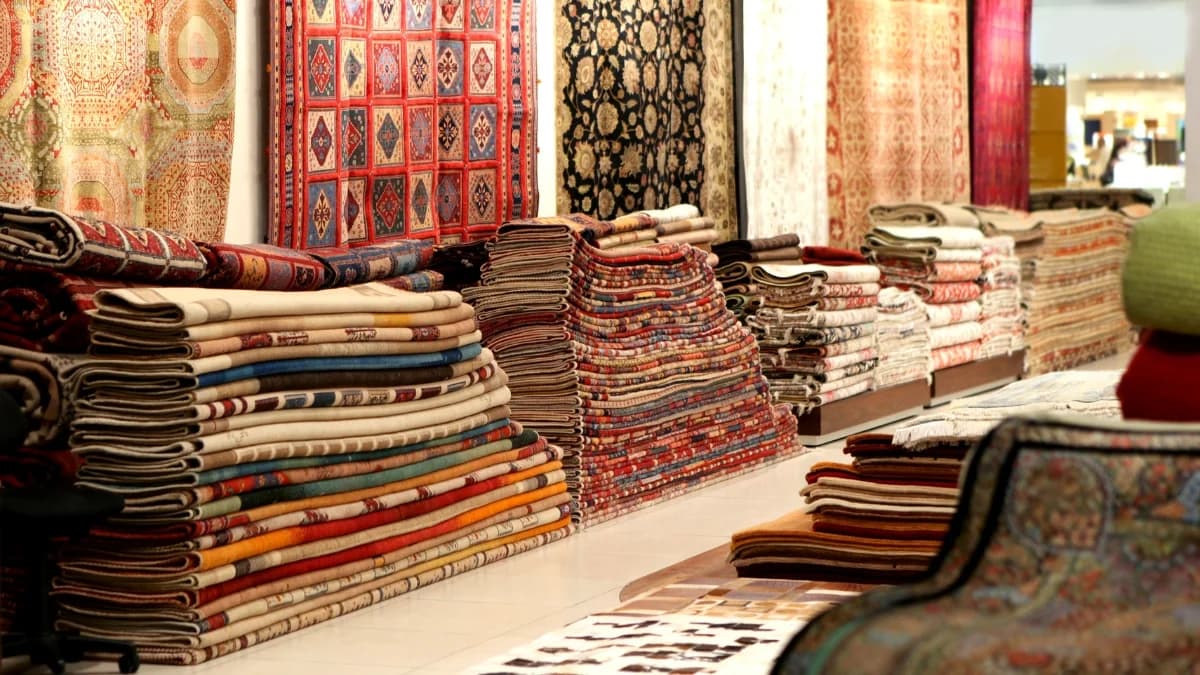
Showroom Stock: 500+ hand-knotted Persian and Afghan carpets, Blue Souk, Sharjah
Founded: 2008 — family-owned, sourced directly from weavers in Iran
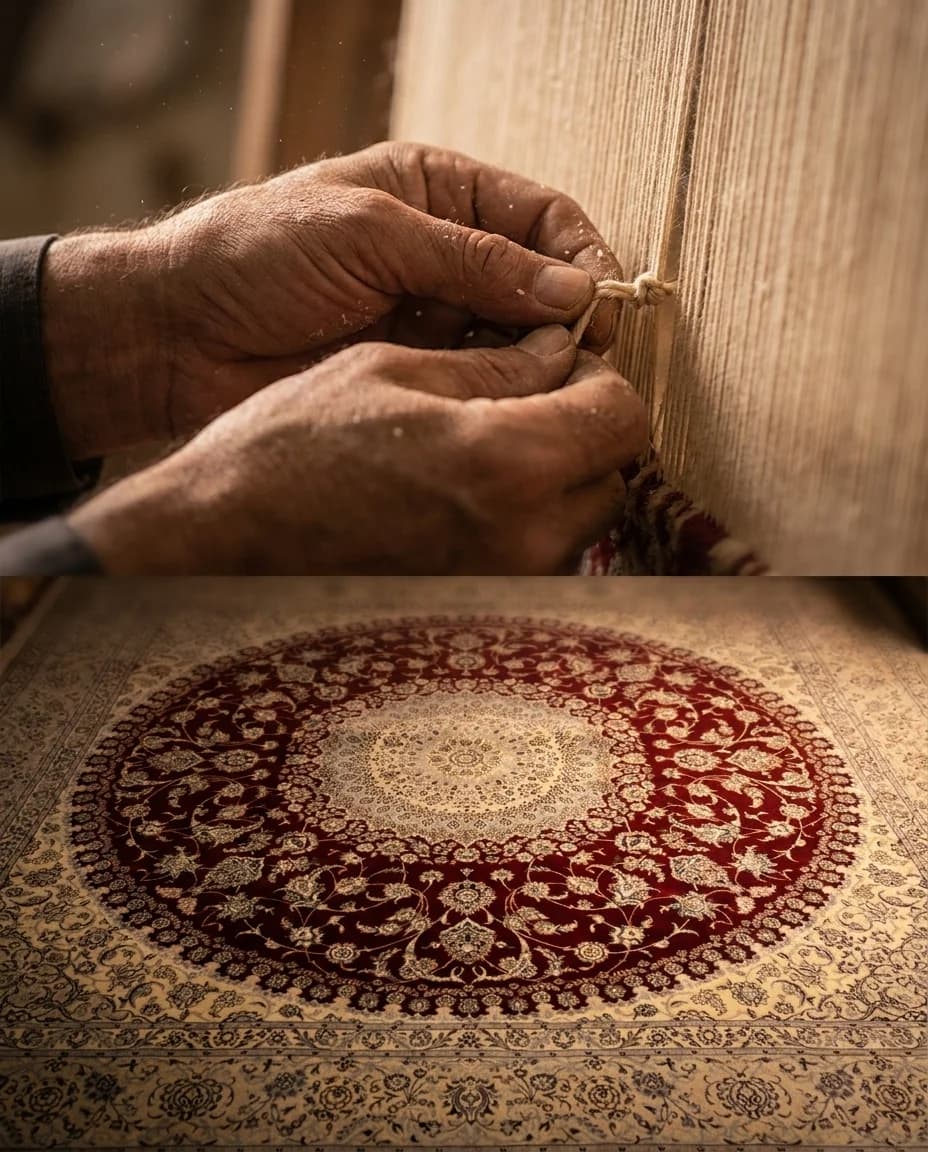
The single most measurable difference between a Persian carpet and a Turkish carpet is the knot: Persian weavers tie an asymmetric (Senneh) knot around one warp thread, while Turkish weavers use a symmetric (Ghiordes) knot wrapped around two. That structural distinction — decided at the loom before a single motif is drawn — shapes everything from pile density and pattern resolution to long-term durability. If you are furnishing a home in the UAE and weighing both traditions, this guide gives you the technical and aesthetic framework to choose well.
The Knot at the Root of Everything
Every hand-knotted carpet is built one knot at a time. The Persian (Senneh) knot is asymmetric: the yarn loops around one warp thread and passes behind the other, allowing the pile to lean in one direction. Because each knot occupies less lateral space, weavers can pack more knots per square inch, enabling finer detail and tighter curves. The Turkish (Ghiordes) knot is symmetric: the yarn wraps fully around two adjacent warps, producing a stiffer, more upright pile that is notably robust underfoot.
Neither knot is categorically superior. The Persian knot rewards intricate curvilinear design; the Turkish knot produces a harder-wearing surface well-suited to geometric patterns. The asymmetric Persian knot is documented across Iran, India, Egypt, and parts of Central Asia, while the symmetric Turkish knot dominates Anatolia and the Caucasus.
Regional Origins and Design Languages
Origin shapes aesthetics as much as technique does. Persian carpet-weaving cities each carry a distinct vocabulary:
- Qum (Qom): Silk-on-silk, extremely fine knotting, medallion and garden compositions.
- Tabriz: Wool, silk, and wool-on-silk; versatile — can be curvilinear or geometric depending on the workshop.
- Isfahan & Kashan: Rich floral arabesques, deep reds and indigos, wool pile on cotton foundation.
- Nain: Pale ivory grounds with delicate blue floral tracery, wool and silk combination.
Turkish weaving centres — Hereke, Oushak, Konya — favour bolder geometric forms: stepped medallions, stylised rams' horns (the Caucasian "kochanak"), and prayer-niche (mihrab) formats. Colour palettes tend toward burnt terracotta, saffron, and ivory rather than the saturated jewel tones common in Persian work.
For a deeper look at Persian regional traditions, see The Complete Guide to Buying Persian Carpets in the UAE.
Fibre Comparison: Wool, Silk, and Cotton
Material choice directly affects handle, sheen, and longevity:
| Fibre | Typical Use | Feel & Look | Durability |
|---|---|---|---|
| Persian wool (Kork) | Tabriz, Kashan, Isfahan | Soft lanolin sheen, warm tones | Very high — 50–100+ years with care |
| Persian silk | Qum, Hereke-style Isfahan | Luminous, colour shifts with light angle | High — best reserved for low-traffic areas |
| Wool-on-silk foundation | Fine Tabriz, Nain | Crisp definition, lustrous ground | High — silk warp adds dimensional stability |
| Turkish wool (hand-spun) | Oushak, Konya | Matte, rustic, chunky pile | Very high — thick pile absorbs wear well |
| Turkish cotton warp | Modern Hereke, Kayseri | Stable flat foundation | Good — prevents warp shrinkage in humidity |
How UAE Interiors Factor In
The UAE's interior landscape — marble floors, high ceilings, open-plan living rooms, and strong air-conditioning — creates specific demands that should inform your choice.
- Marble and stone floors: Persian carpets with a cotton or silk warp lie flatter and are less likely to curl on hard surfaces than thick-pile Turkish tribal pieces.
- Large open-plan rooms: A room exceeding 5 × 4 metres reads well under a medallion-format Persian carpet (Kashan or Isfahan) where the symmetrical design centres the space visually.
- Majlis and formal reception rooms: Both traditions suit these spaces, but the deeper, richer palette of Tabriz or Kashan work aligns naturally with traditional Gulf interior tastes — dark wood, brass, and upholstered seating.
- Children's play areas or home offices: A wool-on-wool Turkish Oushak or a sturdy Afghan piece (which uses the same Persian knot as Iranian carpets) handles daily foot traffic more comfortably than fine silk.
Knot Density and Pattern Resolution: A Practical Guide
Knot density — measured in knots per square inch (KPSI) or knots per square metre (KPSM) — determines how finely a pattern can be rendered. As a working guide:
- Under 80 KPSI: Bold geometric designs only; tribal and nomadic style. Typical of coarser Turkish and Caucasian pieces.
- 80–160 KPSI: Semi-formal geometric or simple floral. Mid-grade Tabriz or Hamadan.
- 160–300 KPSI: Detailed curvilinear florals. Quality Kashan, Isfahan, fine Oushak.
- 300–600 KPSI: Fine medallion work with intricate arabesques. High-grade Tabriz, Nain.
- 600–900+ KPSI: Pictorial or miniature-style detail. Finest Qum silk.
When you handle a carpet in our showroom, you can count knots on the reverse by placing a ruler along one inch of warp and counting the rows — a simple test that removes guesswork entirely.
Age, Provenance, and Investment Value
Antique Persian carpets (generally defined as 80+ years old) have historically held or increased their value, particularly pieces from Kashan, Isfahan, and Tabriz. Turkish Hereke silk carpets — woven for the Ottoman court from the mid-19th century — also command serious collector interest. However, for most UAE buyers purchasing a carpet as a home furnishing first and an investment second, the relevant question is: will this piece age gracefully? Wool Persian and wool Turkish carpets both patinate beautifully; the colours soften without fading harshly, and the pile compresses evenly over decades of use.
For guidance on assessing quality and provenance before purchasing, refer to our detailed resource: The Complete Guide to Buying Persian Carpets in the UAE.
Price Benchmarks for the UAE Market
Pricing is driven by knot density, fibre type, size, age, and provenance — not simply by country of origin. As a general orientation for the current UAE retail market:
- Entry-level hand-knotted wool (Persian or Turkish), small sizes (60 × 90 cm to 1 × 1.5 m): AED 600–2,000
- Mid-grade wool Persian (Tabriz, Kashan, Hamadan), 2 × 3 m: AED 4,000–15,000
- Fine wool-on-silk Persian (Tabriz, Nain), 2 × 3 m: AED 15,000–50,000
- Qum pure silk, medium size (1.5 × 2.2 m): AED 12,000–60,000+
- Antique or semi-antique pieces: highly variable, AED 10,000 to six figures
Machine-made or hand-tufted pieces labelled as "Persian-style" or "Turkish-style" sell for a fraction of these prices but carry no investment value and wear differently underfoot. Always verify that the piece you are purchasing is hand-knotted before committing.
Caring for Your Carpet in the UAE Climate
The UAE's combination of air conditioning (low indoor humidity) and occasional sandy dust requires straightforward but consistent care. Rotate the carpet 180° every 12–18 months to even pile wear. Vacuum along the pile direction, not against it. For deep cleaning, professional washing — ideally by specialists who understand natural dyes and hand-spun wool — is recommended every three to five years. Both Persian and Turkish natural-dye carpets are adversely affected by prolonged direct sunlight, so position them away from west-facing floor-to-ceiling windows where afternoon sun is intense.
Explore our full Persian carpet collection to see the range of origins, sizes, and price points available in our Sharjah showroom.
Visit Al Malakia Persian Carpets in Sharjah
Al Malakia has operated from Shop 45–48, Central Souq Block 3 (Blue Souk), King Faisal Road, Sharjah since 2008. As a second-generation family business sourcing directly from weavers in Iran, we stock over 500 hand-knotted Persian and Afghan carpets across all origins, sizes, and price points — from entry-level wool pieces to collector-grade Qum silk.
Getting here from Dubai: We offer free door-to-door transfer from Dubai hotels. Find out how to visit from Dubai.
Visiting from Abu Dhabi: Private transfer arrangements are available. Plan your visit from Abu Dhabi.
Opening hours: Saturday–Thursday 10:00–22:00 | Friday 14:00–22:00
Phone / WhatsApp: +971 50 537 2997
Contact us or message us on WhatsApp before your visit — we can advise on what to look for based on your room dimensions and interior style.
Frequently Asked Questions
What is the practical difference between the Persian knot and the Turkish knot?
The Persian (Senneh/asymmetric) knot wraps around one warp thread, leaving the other free. This allows the pile to be packed more tightly, producing higher knot density and finer pattern detail. The Turkish (Ghiordes/symmetric) knot wraps symmetrically around two warp threads, creating a more upright, sturdier pile. In practice: Persian-knotted carpets tend to have higher KPSI and more curvilinear designs; Turkish-knotted carpets are often thicker underfoot and better suited to bold geometric compositions.
Are Persian carpets always more expensive than Turkish carpets?
No. Price depends on knot density, fibre, size, age, and condition — not nationality. A fine Turkish Hereke silk carpet can exceed the price of a mid-grade Persian wool Kashan. Conversely, a tribal Persian Qashqai may be priced similarly to a comparable Turkish Konya. Focus on the specific piece rather than the country of origin when assessing value.
Which type holds its value better over time?
Both traditions have produced pieces that hold and appreciate in value, particularly antiques and workshop pieces with documented provenance. For new purchases, fine Persian workshop carpets from cities like Kashan, Isfahan, and Qum have the strongest secondary market in the Gulf region. That said, any hand-knotted carpet with high knot density, natural dyes, and quality fibre will outperform machine-made alternatives over a 20–30 year horizon.
Can I use a fine silk Persian carpet in a high-traffic area of my home?
It is not advisable. Silk pile, while exceptionally beautiful and luminous, is more susceptible to compression and fibre wear than wool under heavy foot traffic. Qum silk carpets are best placed in formal reception rooms, display areas, or hung as wall pieces. For corridors, dining rooms, and living areas with daily traffic, a wool or wool-on-silk Persian — or a sturdy wool Turkish — will perform far better over decades.
How do I tell whether a carpet is genuinely hand-knotted rather than machine-made?
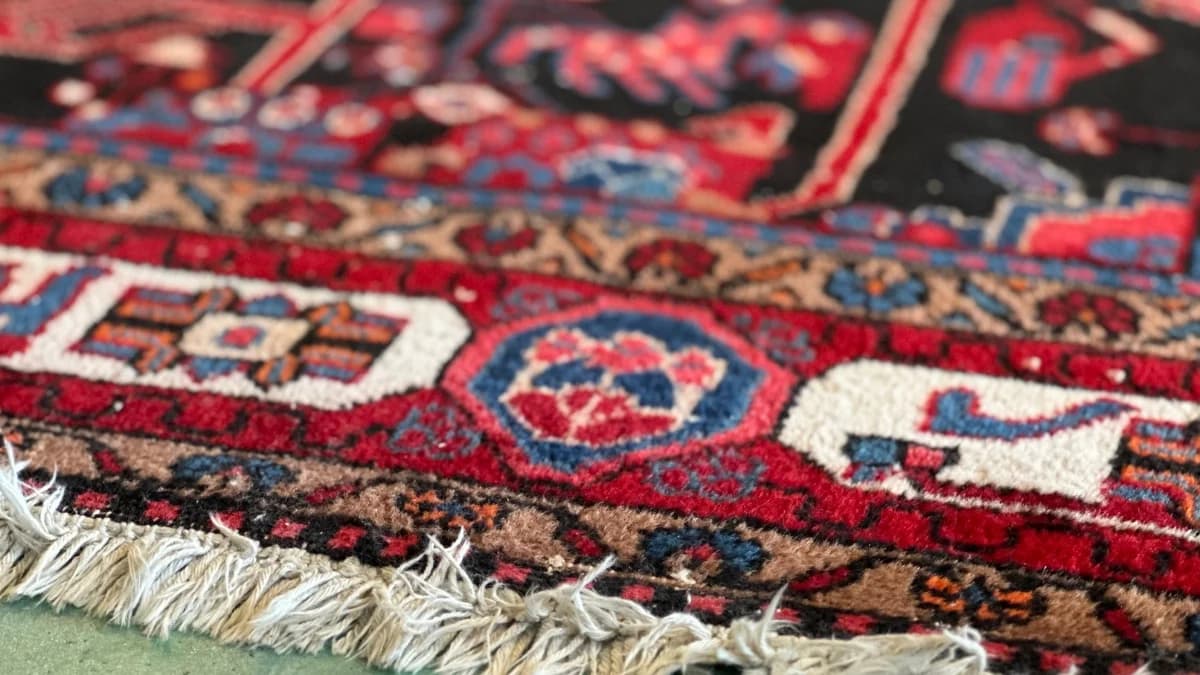
Examine the reverse of the carpet. On a genuine hand-knotted piece, you will see individual knot tufts — slightly irregular, each one tied separately. The fringe is an extension of the warp threads, not sewn on. On a machine-made carpet, the reverse shows a uniform, perfectly regular mesh, and the fringe is typically stitched or glued to the edge. You can also feel the difference: the back of a hand-knotted carpet is rougher and less uniform than a machine loom's output.
Does Al Malakia stock Turkish carpets as well as Persian?
Our primary specialism is hand-knotted Persian carpets from Iran — Qum, Tabriz, Isfahan, Kashan, and Nain — as well as Afghan pieces. We do not stock Turkish carpets as a category, but our team is knowledgeable about both traditions and can give you an objective comparison during your showroom visit. If a Persian carpet does not meet your requirements, we will tell you honestly rather than sell you a piece that does not fit. Learn more about who we are.
Whether you are drawn to the curvilinear precision of a Kashan floral or the geometric directness of a Turkish tribal weave, the decision ultimately comes down to how you live in your space. Visit us at the Blue Souk, Sharjah, where our team can place pieces side by side in natural light and walk you through every detail — knot by knot, fibre by fibre. WhatsApp us on +971 50 537 2997 to arrange a visit or ask a question before you come.